
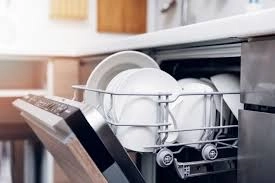
Dishwasher Not Cleaning Properly:9 Causes & Proven Fixes
Dishwasher Not Cleaning Properly:
9 Causes & Proven Fixes
The complete Cape Coral homeowner’s guide to diagnosing and solving a dishwasher that leaves food residue, cloudy film, or dirty dishes
Your dishwasher is supposed to save time. So when a full cycle ends and you pull out plates still coated in last night’s pasta, something has clearly gone wrong. A dishwasher not cleaning properly is one of the most common appliance complaints we handle at Trusted Appliance Repair across Cape Coral, Florida. And in my experience, the problem almost always has a fixable cause.
I have worked on hundreds of dishwashers in Southwest Florida homes. The hard water here, the heat, and the way most people load their machines all create a perfect storm for poor wash performance. After this guide, you will know exactly where to look, what to check, and when to call a professional.
Key Takeaways
- A clogged filter is the single most common reason a dishwasher stops cleaning well, and most homeowners never clean it
- Cape Coral’s hard water causes mineral buildup that blocks spray arm holes within 6 to 12 months
- Water temperature below 120°F means detergent cannot dissolve properly or cut grease
- Wrong detergent type, overloading, and poor loading patterns account for nearly 40% of cases we see
- Most of these fixes take under 30 minutes and zero special tools
- If the issue is a failed wash pump, control board, or water inlet valve, professional repair typically costs less than a new machine
9 Reasons Your Dishwasher Is Not Cleaning Dishes
Before pulling out tools, you need to identify the root cause. These nine issues cover the vast majority of cases we diagnose in Cape Coral homes.
Clogged or Dirty Filter
Food debris blocks water flow and recirculates grime onto dishes. Most filters need cleaning every 30 days.
Blocked Spray Arms
Hard water deposits and food particles plug the small jets that spin water around the tub.
Low Water Temperature
Dishwasher detergent requires 120–140°F water to activate enzymes and dissolve grease.
Incorrect Detergent Use
Too little, too much, wrong type, or old clumped detergent all produce bad results.
Poor Loading Habits
Blocking spray arms or nesting items together prevents water from reaching dish surfaces.
Faulty Water Inlet Valve
If the machine does not fill to the correct water level, cleaning power drops significantly.
Worn or Failing Wash Pump
A degraded pump produces weak water pressure that cannot remove baked-on food.
Hard Water Mineral Buildup
Cape Coral water averages 200–300 ppm of hardness, which coats the interior and dishes with white film.
Defective Door Gasket or Latch
A poor seal reduces water temperature and pressure by allowing heat to escape during the cycle.
1. Clogged Filter: The Most Overlooked Fix
I cannot count how many service calls I have taken where the homeowner had no idea their dishwasher even had a filter. Most modern dishwashers built after 2010 use a manual self-cleaning filter. That filter sits at the bottom of the tub, and it quietly fills up with grease, food fragments, and paper bits until water can barely flow through it.
When the filter is blocked, dirty water recirculates through the machine. Your dishes essentially get rinsed in the same cloudy water that started the cycle — resulting in greasy film, stuck-on particles, and that sour smell many Cape Coral residents describe when they open the door.
- Remove the bottom rack and locate the cylindrical filter assembly at the tub floor.
- Twist the upper filter a quarter-turn counterclockwise and lift it out.
- Pull out the flat mesh filter beneath it.
- Rinse both parts under hot running water, scrubbing gently with a soft brush and dish soap.
- Soak in white vinegar for 10 minutes if you see mineral scale or hard-water film.
- Reassemble and run a short hot cycle to test.
A family on Surfside Boulevard called us in January 2025 after their 3-year-old Bosch dishwasher suddenly stopped cleaning. The filter was completely packed with grease and coffee grounds. The machine itself was in perfect mechanical health. A thorough filter cleaning followed by a citric acid rinse cycle restored full performance in 20 minutes. No parts required.
2. Blocked Spray Arms: The Hard Water Problem
Your dishwasher’s spray arms spin and spray pressurized hot water in every direction to reach all dish surfaces. Each arm has multiple small holes — typically 1 to 3 mm in diameter. In Cape Coral, those holes clog fast. Southwest Florida water ranks among the hardest in the state, and calcium deposits build up inside spray arm jets over months, reducing pressure and creating uneven spray patterns.
- Pull out both racks and remove the spray arms by unclipping or unscrewing them.
- Hold each arm up to light and look through each jet hole. Blocked ones will appear dark or plugged.
- Use a toothpick or straightened paperclip to clear each blocked hole.
- Soak arms in a 50/50 mix of white vinegar and warm water for 20 to 30 minutes.
- Rinse under high-pressure tap water and recheck all holes before reinstalling.
3. Low Water Temperature: The Silent Performance Killer
Most manufacturers specify a minimum of 120°F, with an optimal range of 130 to 140°F. Below that threshold, enzyme-based detergents simply do not activate, and grease molecules do not emulsify. There are two common causes: your water heater may be set too low, or someone used a lot of hot water before running the dishwasher.
- Check your water heater thermostat and set it to 120°F minimum.
- Run the kitchen faucet on hot for 60 seconds before starting a wash cycle.
- Use a dishwasher thermometer (under $12) to measure actual inlet temperature.
- If your dishwasher has a built-in temperature boost feature, ensure it is enabled.
A retired couple on Pine Island Road told me their dishes had been coming out greasy for two months. They had recently lowered their water heater to 110°F after reading about energy savings online. Their Maytag had no internal temperature boost, and water at the inlet was measuring 108°F. We raised the water heater to 120°F and their very next cycle produced spotless results.
4. Detergent Issues: Type, Amount, and Freshness
Detergent matters far more than most people realize. Here in Cape Coral, humidity accelerates detergent degradation significantly — especially powder stored in an open box under the sink. For most machines, a quality pod like Cascade Platinum or Finish Quantum will outperform generic store brands. Always keep the rinse aid dispenser full.
| Detergent Type | Performance | Best For | Hard Water |
|---|---|---|---|
| Pods / Pacs | Excellent | Most households | Good (hard water formula) |
| Gel | Good | Eco / sensitive skin | Moderate (add rinse aid) |
| Powder | Good | Budget-conscious | Poor unless fresh & sealed |
| Dish Soap | NEVER USE | Hand washing only | Will overflow machine |
| Store brand | Variable | Light soil loads | Often inadequate |
5. How You Load the Dishwasher Actually Matters
Loading technique is genuinely important. I see the same mistakes constantly in Cape Coral homes: bowls nested inside each other, plates blocking the lower spray arm, and tall glasses hitting the upper spray arm before it completes a rotation.
- Angle bowls and cups downward so water drains rather than pools.
- Space items so they do not touch or nest together.
- Put larger items along the sides, not blocking the center spray arm.
- Spin both spray arms by hand after loading. If either hits something, rearrange.
- Do not pre-wash dishes — modern detergents need some food residue to activate.
6. Faulty Water Inlet Valve: Not Enough Water
When this valve begins to fail, the machine may only fill to 60–70% of its intended capacity. The spray arms cannot generate proper pressure and the bottom of the tub may not even be submerged during the wash phase. Open the door at the very start of a cycle and check whether the water level reaches just above the heating element at the bottom.
7. Failing Wash Pump: A Mechanical Issue
When the pump motor begins to wear out, it may still run but produce noticeably weaker water pressure. A healthy dishwasher produces a consistent, moderately loud water-circulation sound. A struggling pump may sound quieter than usual or produce an intermittent low hum instead of the normal strong spray sound.
I diagnosed a 7-year-old KitchenAid on SE 47th Terrace producing approximately 55% of normal pressure. We replaced the wash pump motor assembly for $165 in parts. The homeowner had been considering replacing the entire appliance for $900. The repair saved them over $700.
8. Hard Water Mineral Buildup: A Cape Coral-Specific Problem
Cape Coral’s water supply consistently registers 200–320 ppm of hardness — classified as “very hard.” Over time, calcium carbonate deposits coat the interior walls, heating element, and spray arms. Address this with a monthly maintenance cycle: run an empty dishwasher on the hottest setting with two cups of white vinegar in a bowl on the top rack, followed by a second empty cycle with half a cup of baking soda on the tub floor.
9. Door Gasket and Latch Issues
A deteriorating door gasket reduces insulation around the wash chamber, causing heat to escape during the cycle. In Florida’s heat, door gaskets often degrade faster than in cooler climates. Check the rubber gasket around the door frame for cracks or sections that have pulled away. A replacement gasket costs $15–$45 and is a DIY-friendly repair on most brands.
Frequently Asked Questions
People Also Ask
Final Thoughts: Get Your Dishwasher Cleaning Like New
A dishwasher not cleaning properly is almost never a sign that your appliance is finished. In the vast majority of cases, the problem is a clogged filter, blocked spray arms, a water temperature issue, or a combination of all three — problems you can fix yourself in under an hour.
If you have worked through this checklist and your dishes are still coming out dirty, Trusted Appliance Repair serves Cape Coral and the broader Lee County area. We carry parts for all major brands and can often complete repairs same-day.
Done Troubleshooting? Let Us Fix It Fast.
Trusted Appliance Repair serves Cape Coral, Lee County, and Southwest Florida. Same-day appointments available.
Book a Repair Visit Today Or read our dishwasher maintenance guide to keep it running all year