Washer Not Working in Cape Coral? Why It Won’t Drain or Spin (9 Causes and Fixes)
It is a Sunday afternoon in Southwest Cape Coral. You just got back from Yacht Club Beach, tossed the sandy towels in the washer, and walked away. Forty minutes later the house is quiet. Too quiet. You open the door and find a drum full of gray water, soaked towels, and a light blinking at you on the control panel. Your washer is not working, and the week’s laundry just stopped.
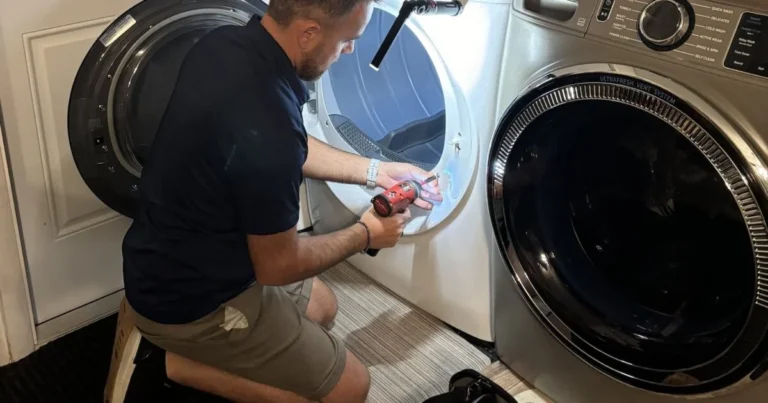
A washer not working in Cape Coral is one of the most common calls we get. Here is the thing most people do not know. A washer that runs fine for years up north takes a beating here. Sand from beach days, iron in well water, sticky humidity, and summer lightning all hit Cape Coral laundry rooms harder than almost anywhere else. Our technicians see the same few problems every week, from the canal homes off Cape Coral Parkway to the newer builds out by Burnt Store Road.
So is it something you can fix in twenty minutes with a towel and a screwdriver? Or is it a part that has to be replaced? And how do you get that load of wet clothes out without flooding the floor?
This guide covers why a washer won’t drain or spin, how to reset it, which fixes are safe to try, and when it is time for washer repair in Cape Coral. Plain English, the same way we explain it on a service call.
The short answer
A washer not working in Cape Coral usually comes down to one of three things: a clogged drain pump filter (sand, coins, hair ties), a failed lid switch or door lock, or an unbalanced load. Check those first. If the washer still will not spin, drain, or start, the problem is likely a drain pump, drive belt, motor coupler, or control board, and that is a job for a technician.
Why do washers break down faster in Cape Coral homes?
Most cases of a washer not working in Cape Coral trace back to four local conditions that wear out washing machines early: sand from beach days, minerals and iron in well water, constant humidity, and power surges from summer lightning storms.
Sand and salt from the beach
Beach towels, swim trunks, and kids’ shorts carry fine sand into the drum. It settles in the drain pump filter and the bottom of the tub. Over a summer, that sand chokes the pump and grinds at the seals.
Hard water and iron from private wells
Plenty of homes in the north end of Cape Coral still run on private wells. Well water here often carries iron and minerals that build up in the inlet valve screens and leave orange stains on whites. Less water gets in, cycles run long, and the valve eventually quits.
Humidity that never takes a day off
Front load washers seal tight to save water. In our humidity, that tight seal traps moisture. Mold grows in the door gasket, the rubber breaks down, and the washer starts to leak and smell.
Lightning and power surges
Southwest Florida sees some of the most lightning strikes in the country every summer (the National Weather Service lightning safety guide explains why Florida leads the nation). One nearby strike can send a surge through the house and damage the electronic control board, the part that runs every cycle on a modern washer.
What is your washer telling you? Match the symptom in 60 seconds
When your washer is not working in Cape Coral, watch what it does and does not do. A washer that hums but will not drain points to the pump or filter. One that drains but will not spin points to the lid switch, door lock, belt, or an unbalanced load. One that does nothing at all points to power, the door lock, or the control board.
| What you see | Most likely cause | DIY or pro |
|---|---|---|
| Will not start, no lights | Tripped breaker, GFCI outlet, bad cord, control board | Check power first, then pro |
| Lights on but will not start | Lid switch or door lock | Pro |
| Water left in the drum | Clogged drain pump filter, kinked hose, failed pump | Clean filter and hose first |
| Drains but will not spin | Unbalanced load, lid switch, belt, motor coupler | Rebalance load, then pro |
| Stops in the middle of a cycle | Door lock, drain problem, control board | Pro |
| Loud banging or walking across the floor | Unbalanced load, worn shocks or suspension rods | Level and rebalance, then pro |
| Fills slowly or not at all | Clogged inlet screens, failed water inlet valve | Check hoses and valves, then pro |
| Leaks or smells musty | Torn door gasket, mold, loose hose | Clean gasket, then pro |
What are the 9 most common reasons a washer stops working?
On Cape Coral service calls, the top three causes are a clogged drain pump filter, a failed lid switch or door lock, and a worn drain pump. Together they explain most washers that will not spin or drain.
1. Clogged drain pump filter
Most front load washers have a small filter behind a panel at the bottom front. Sand, coins, bobby pins, hair ties, and lint collect there until water cannot get out. This is the number one thing we find after a beach weekend. Fix: put down towels and a shallow pan, open the panel, and unscrew the filter slowly. Expect water. Clean it and screw it back tight.
2. Kinked or clogged drain hose
If the washer was pushed back against the wall, the drain hose can fold over. Lint and sand can also pack the end of the hose. Fix: pull the washer out, straighten the hose, and check it for clogs.
3. Failed lid switch or door lock
A washer will not spin, and often will not start, if it thinks the lid or door is open. On top loaders the lid switch breaks. On front loaders the door lock fails and you see a door lock error code. Humidity and soap residue speed this up. This part should be replaced by a technician.
4. Unbalanced load
One heavy bath mat, a few beach towels, or a single pair of jeans can throw the drum off balance. The washer senses it and refuses to spin. Fix: stop the cycle, spread the load evenly, and run a spin cycle. If it happens with every load, the next cause is likely.
5. Worn shocks or suspension rods
These parts hold the drum steady. When they wear out, the washer bangs, shakes, and walks across the floor, and it may stop spinning to protect itself. Older washers in garages and lanais wear these out faster.
6. Broken drive belt or motor coupler
The motor turns the drum through a belt or a coupler. When it snaps, you hear the motor run but the drum does not turn. Common on top load washers that run heavy loads often.
7. Failed drain pump
If the filter is clean and the hose is clear but water still sits in the drum, the pump itself may be dead. You may hear a hum with no water moving, or nothing at all. Sand that got past the filter is a common cause here.
8. Clogged inlet screens or a bad water inlet valve
Small screens where the hoses connect catch minerals and rust from well water. When they clog, the washer fills slowly or not at all. If the screens are clean and it still will not fill, the inlet valve has failed.
9. Damaged control board
The control board runs every cycle. A power surge, a lightning storm, or moisture can damage it. Signs include a dead panel, random error codes, or a washer that stops at the same point every time. Always rule out simpler causes before replacing a board.
Why is my washer humming but not spinning?
A washer that hums but does not spin has power, but something is stopping the drum. If water is still in the tub, the drain pump is usually jammed with debris. If the tub is empty and the motor is running, look at a broken drive belt, a worn motor coupler, or a failed lid switch or door lock.
Turn the washer off right away when you hear it humming with nothing moving. A jammed pump or locked motor that keeps trying can overheat and burn out, and that turns a small repair into a bigger one.
How do you reset a washing machine or force it to drain?
To reset most washers, unplug them (or flip the breaker) for one to five minutes, plug back in, and run a drain and spin cycle. To force a front load washer to drain, empty it through the drain pump filter at the bottom front. On a top load washer, bail out the water and then lower the drain hose into a bucket.
- Reset the power. Unplug the washer for one to five minutes. This clears many error codes and stuck cycles on Whirlpool, Samsung, LG, GE, and Maytag models.
- Run drain and spin only. Pick the “Drain and Spin” or “Spin Only” setting with an empty or light load.
- Drain it by hand if needed. Front load: towels and a shallow pan under the filter panel, then open the filter slowly. Top load: scoop the water out with a cup or a wet vac, then check the drain hose.
- Check your manual. Some models have their own reset button sequence. If the same error comes right back after a reset, a part has failed.
Is it different for top load and front load washers?
Yes. Top load washers that will not spin usually have a bad lid switch, belt, or motor coupler. Front load washers that will not drain or spin usually have a clogged drain pump filter or a failed door lock.
| Washer type | Most common problems we see | Common brands in Cape Coral homes |
|---|---|---|
| Top load | Lid switch, drive belt, motor coupler, unbalanced loads | Whirlpool, Maytag, GE |
| Front load | Clogged pump filter, door lock, door gasket mold and leaks | Samsung, LG, Whirlpool |
| Washer and dryer stack | Door lock, drain pump, vibration from worn suspension | LG, Samsung, GE |
Which checks can you safely do yourself in the next 20 minutes?
Before you call about a washer not working in Cape Coral, try five safe checks that fix a lot of “dead” washers: confirm power, rebalance the load, clean the drain pump filter, straighten the drain hose, and check the water supply. Unplug the washer before you touch anything inside it.
- Confirm power. Check the breaker panel and press the reset button on any GFCI outlet in the laundry room or garage. Make sure the plug is pushed all the way in.
- Rebalance the load. Spread heavy items around the drum, take out a towel or two, and run a drain and spin cycle.
- Clean the drain pump filter. Towels down, pan ready, open it slowly. Clear out sand, lint, and anything small and shiny.
- Straighten the drain hose. Pull the washer out a few inches and make sure the hose is not kinked or crushed behind it.
- Check the water supply. Both faucets behind the washer should be fully open. If you are on well water, turn them off and check the screens where the hoses connect for rust and grit.
If none of that works, stop there. Forcing a door lock, pulling panels, or testing a control board with the washer plugged in can turn a simple repair into a bigger one.
What does a typical Cape Coral washer call look like?
Most calls follow the same pattern: a washer that stopped mid-cycle full of water, a quick drain and diagnosis, and a repair finished on the same visit when the part is on the truck.
Here is a call that plays out in Cape Coral almost every week in summer. A family in the southwest part of town has a front load washer that stopped mid-cycle with the drum full of water. The panel shows a drain error. They tried running it again twice. Nothing.
Our technician drains the drum through the pump filter and finds a mix of beach sand, two quarters, and a hair tie wrapped around the pump impeller. The filter is cleared, the impeller is checked, and the pump runs, but it is weak and noisy from months of grinding sand. The pump is replaced, a test cycle runs clean, and the family gets a two-minute lesson on cleaning that filter once a month.
The lesson: the filter is the cheapest fix there is, and ignoring it is how a simple clog becomes a new pump.
Is it worth fixing a washing machine that won’t drain or spin?
Repair makes sense for most washers under about 8 years old when the problem is a pump, lock, belt, valve, or switch. Replacement makes sense when the washer is past 10 years, the tub or transmission has failed, or the repair would cost more than half the price of a new one.
Most washers last around 10 to 13 years. In a Cape Coral garage with heat, humidity, and salt air, that number can be shorter. A few questions to ask yourself:
- How old is the washer, and has it needed repairs before?
- Is it a part that wears out, like a pump or door lock, or a major failure like the tub bearing?
- Is there rust on the cabinet or drum from years in the garage?
Repair prices vary by the part and the brand, so we do not guess online. Call us and we will tell you the price on the phone before any work starts. Upfront pricing, no surprises.
How do you keep a washer running longer in Cape Coral?
Shake the sand out before you wash, clean the drain pump filter once a month, leave the door open after each load, use the right amount of HE detergent, and plug the washer into a surge protector rated for appliances.
- Shake out beach gear outside. Every cup of sand that stays out of the drum is sand that never reaches the pump.
- Clean the filter monthly. More often in summer if you hit the beach a lot.
- Leave the door and drawer open. Let the gasket and detergent drawer dry between loads so mold has nowhere to grow.
- Wipe the door gasket. Pull back the rubber fold and wipe out lint and water once a week.
- Use less detergent. HE washers need very little. Extra soap leaves residue that feeds mold and gums up the door lock.
- Run a cleaning cycle. Once a month on the hottest setting with a washer cleaner.
- Protect it from surges. Ask about a whole home surge protector, especially before lightning season.
- Check the hoses. Look for bulges or cracks once a year. Braided steel hoses hold up better than rubber.
Frequently asked questions
Why is my washer not spinning but it drains?
The washer is draining, so the pump works. A spin problem usually means an unbalanced load, a failed lid switch or door lock, a worn drive belt, or a broken motor coupler. Spread the load evenly and run a spin cycle. If it still will not spin, call a technician.
Why is there still water in my washer after the cycle ends?
The water has nowhere to go. The drain pump filter is clogged, the drain hose is kinked, or the drain pump has failed. Clean the filter at the bottom front of a front load washer first. In Cape Coral, beach sand is the most common reason we find.
Why does my front load washer smell like mildew?
Cape Coral humidity plus a tightly sealed door traps moisture in the rubber gasket. Mold grows there and in the detergent drawer. Wipe the gasket weekly, leave the door open after each load, use less HE detergent, and run a monthly cleaning cycle.
Can a power surge damage a washing machine?
Yes. A nearby lightning strike or a surge when power comes back after an outage can damage the control board. Signs include a blank panel or random error codes. A surge protector helps protect it.
How much does washer repair cost in Cape Coral?
It depends on the part that failed and the brand of your washer. Call (239) 448-0792 and we will tell you the price on the phone before any work starts. Upfront pricing, no surprises.
Do you repair washers outside Cape Coral?
Yes. We repair washers in Cape Coral, Fort Myers, North Fort Myers, Lehigh Acres, Fort Myers Beach, Estero, and Bonita Springs. See our service areas page.
What should you do when your washer is not working in Cape Coral?
Back to that drum full of gray water. Unplug the washer. Towels down. Open the drain pump filter and clear out the sand. Straighten the hose. Spread the load and run a spin cycle. Still stuck? That is a lock, a pump, a belt, or a board, and it is time to call a pro.
If your washer is not working right now and you need washing machine repair in Cape Coral, Book Washer Repair in Cape Coral or call (239) 448-0792. Our trucks carry the common parts, so most repairs finish on the first visit. Dryer, refrigerator, or dishwasher acting up too? We fix those on the same visit.
Related guides: Refrigerator not cooling in Cape Coral and Dishwasher not cleaning properly: 9 causes and proven fixes. Also see why food spoils quickly in your refrigerator.
One question for you: what is the strangest thing you have ever found in your washer’s drain filter? Tell us in the comments. We have a running list, and it is a long one.